7 Days Lemosho Route
7 Days Lemosho Route
Overview
The 7 days Lemosho route is one of the most scenic and rewarding ways to climb Mount Kilimanjaro with Serengeti Wild Tours. Starting from the western side of the mountain, this route offers beautiful rainforest trails, open Shira Plateau views, strong acclimatization, and a higher chance of summit success. It is ideal for climbers who want a balanced Kilimanjaro trek with great scenery, fewer crowds, and a memorable journey to Uhuru Peak.
Highlights
- 7 Days Lemosho Route climb with a scenic western approach to Mount Kilimanjaro
- Quiet rainforest trails from Londorossi Gate to Mti Mkubwa Camp
- Shira Plateau crossing with open views, volcanic scenery, and gradual altitude gain
- Acclimatization through Lava Tower, Barranco Camp, Karanga Valley, and Barafu Camp
- Guided summit attempt to Uhuru Peak at 5,895 meters, the highest point in Africa
- Descent through the Mweka Route after the summit day
- Professional mountain guides, porters, cook, park fees, camping equipment, and mountain meals included
- Safety support with emergency oxygen, first aid supplies, pulse oximeter checks, and an evacuation procedure
- 7 Days Lemosho Route is ideal for climbers who want scenery, fewer crowds, and strong summit preparation
Itinerary
Your 7 Days Lemosho Route climb begins with a transfer from Moshi or Arusha to Londorossi Gate for registration and Kilimanjaro National Park formalities. After clearance, continue by 4x4 vehicle toward the Lemosho Glades, where the walking section starts. The first trail passes through quiet montane forest with chances to enjoy birds, ancient trees, and the peaceful western side of Mount Kilimanjaro. The route leads to Mti Mkubwa Camp, also known as Big Tree Camp, where you settle into your first mountain campsite. This opening day is a gentle introduction to the mountain environment while your guide sets a steady pace for the days ahead. Elevation reaches about 2,750 meters, and hiking time is usually 4 to 5 hours depending on trail conditions.
After breakfast, the trail leaves the dense rainforest and begins to climb into the giant heather and moorland zone. This stage of the 7 Days Lemosho Route shows how quickly Kilimanjaro landscapes change as the forest opens into wider views and volcanic terrain. You continue toward the Shira Ridge, then descend gently onto the Shira Plateau before arriving at Shira Camp 1. The day is important for acclimatization because altitude is gained steadily without rushing the body. On clear days, you may enjoy views across the plateau and toward the higher slopes of Kilimanjaro. Elevation rises from about 2,750 meters to 3,500 meters, with around 12 kilometers of trekking and about 5 hours of hiking.
Today is a shorter and scenic walk across the Shira Plateau, one of the most beautiful sections of the 7 Days Lemosho Route. The trail moves through open moorland, volcanic rock formations, and wide mountain scenery before reaching Shira Camp 2 near a stream. Because the hiking time is lighter, this day supports acclimatization and gives your body more time to adjust before moving higher. Depending on weather and guide assessment, an optional short acclimatization walk may be done around the plateau. This section is also excellent for photography because the landscape feels open, remote, and dramatic. Elevation rises from about 3,500 meters to 3,840 meters, with around 6 kilometers of walking and about 2 to 4 hours of hiking.
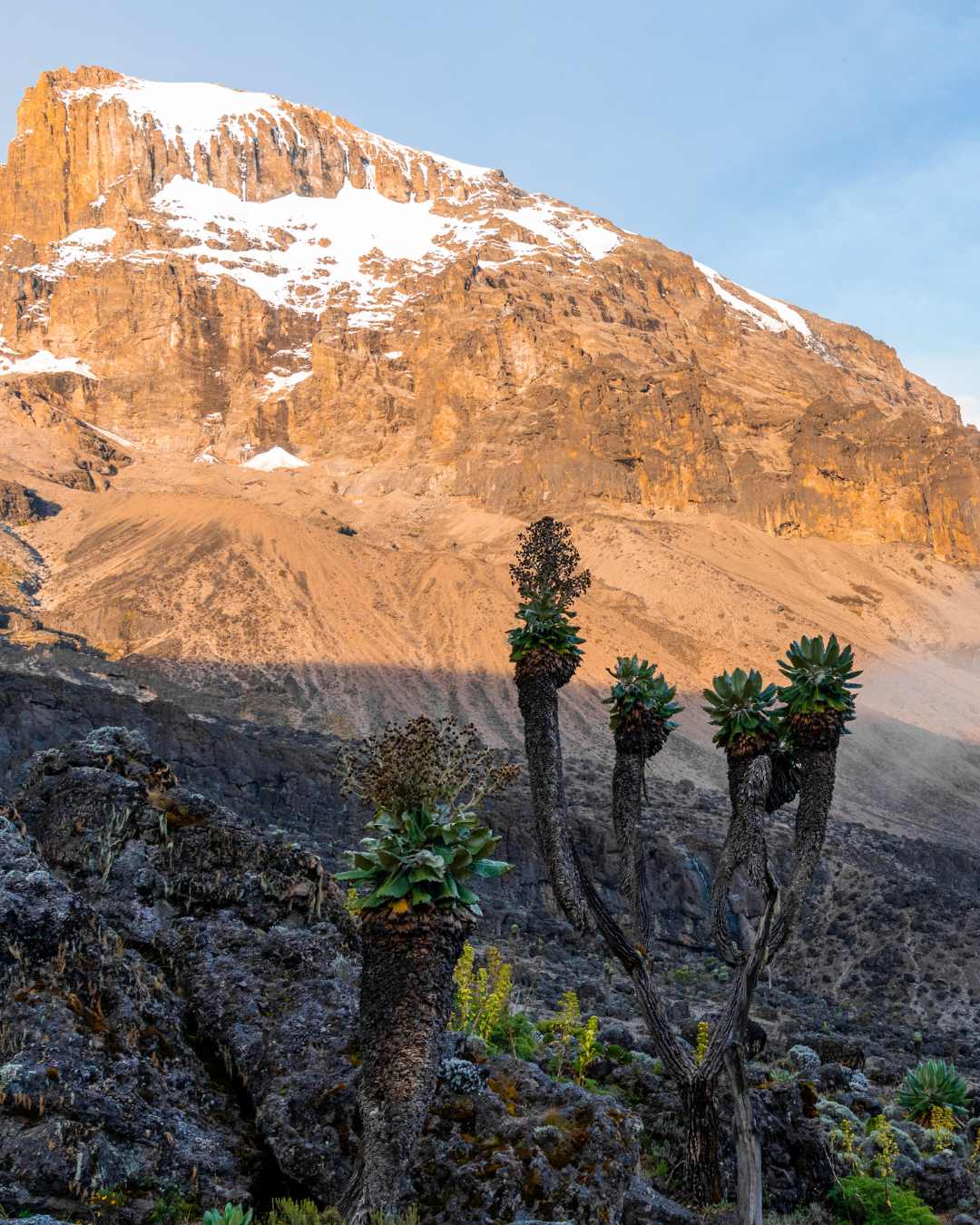
After breakfast, the trail turns east toward the alpine desert zone and the impressive Lava Tower at about 4,630 meters. This is one of the key acclimatization days on the 7 Days Lemosho Route because you climb high during the day and sleep lower at Barranco Camp. After a lunch stop near Lava Tower, the path descends below the Western Breach and Breach Wall toward Barranco Valley. The descent helps your body adjust while the scenery becomes more dramatic, with cliffs, valleys, and views of Kilimanjaro’s upper slopes. Barranco Camp sits below the famous Barranco Wall, creating one of the most memorable campsite settings on the route. The day covers about 15 kilometers and usually takes around 7 hours.
Begin the morning by crossing Barranco Valley before ascending the famous Barranco Wall with support from your mountain crew. Although the wall looks steep from camp, guides manage the pace carefully and help climbers move safely through each section. The trail then continues along the Southern Circuit through Karanga Valley before gradually climbing toward Barafu Camp. This section of the 7 Days Lemosho Route gives strong views of Kibo and Mawenzi when the sky is clear. Barafu Camp is exposed and rocky, so your guide will help you understand the campsite layout before dark. After an early dinner, rest and prepare your summit gear for the night ahead. Trekking time is usually 7 to 8 hours over about 9 kilometers.
Around midnight, the summit attempt begins from Barafu Camp. This is the hardest and most rewarding stage of the 7 Days Lemosho Route, with a slow climb through steep scree toward Stella Point on the crater rim. After a short rest, continue along the rim toward Uhuru Peak at 5,895 meters, the highest point in Africa. Cold temperatures, altitude, and long walking hours make this a serious challenge, so your guides will manage pace, hydration, and safety throughout the climb. After photos and celebration at the summit, descend to Barafu Camp for a short rest, collect your gear, and continue down toward Mweka Camp at about 3,100 meters. This is a long day, but reaching Uhuru Peak makes it unforgettable.
After breakfast, complete the final descent through forest trails to Mweka Gate. The trail can be wet and slippery at lower elevations, so trekking poles and careful footing are useful. At the gate, successful climbers sign the register and receive summit certificates. Climbers who reached Stella Point receive green certificates, while those who reached Uhuru Peak receive gold certificates. After park procedures, Serengeti Wild Tours transfers you back to Moshi for a hot shower, rest, and celebration after the mountain. This final day completes your 7 Days Lemosho Route Kilimanjaro climb and marks the end of a scenic, challenging, and rewarding trekking journey.
- All transfers to the mountain and back to your Moshi hotel
- Airport pickup and drop-off
- Professional and experienced mountain guides
- Guides, porters, cook salaries, and park fees
- Quality waterproof four-season mountain sleeping tents on twin sharing basis
- Sleeping mattress
- Emergency oxygen cylinder
- Hotel accommodation before and after the climb as listed in the package
- All meals while on the mountain
- Quality mess tent with table and chairs
- Large portions of fresh, healthy, and nutritious food
- Clean and purified drinking water
- Conservation fees as part of park fees
- Camping fees as part of park fees
- Rescue fees as part of park fees
- VAT charged by the Government of Tanzania
- Tanzania visa
- International flights
- Personal trekking equipment such as sleeping bags, hiking boots, clothing, and other personal gear
- Portable toilet at USD 150
- Tips and gratuities
- Travel insurance
- Personal expenses such as laundry, telephone, beverages, and souvenirs
- Meals not listed in the itinerary
- Liquors, beers, and bottled beverages
- Online payment surcharge for balance payment where applicable
Booking
Book This Package
Send your travel details to Serengeti Wild Tours. Our team will reply with availability, price confirmation, and the next booking steps.
- All transfers to the mountain and back to your Moshi hotel
- Airport pickup and drop-off
- Professional and experienced mountain guides
- Guides, porters, cook salaries, and park fees
- Quality waterproof four-season mountain sleeping tents on twin sharing basis
- Sleeping mattress
- Emergency oxygen cylinder
- Hotel accommodation before and after the climb as listed in the package
- All meals while on the mountain
- Quality mess tent with table and chairs
- Large portions of fresh, healthy, and nutritious food
- Clean and purified drinking water
- Conservation fees as part of park fees
- Camping fees as part of park fees
- Rescue fees as part of park fees
- VAT charged by the Government of Tanzania
FAQs
Yes. The 7 Days Lemosho Route is known for a better acclimatization profile than shorter Kilimanjaro climbs because it approaches gradually from the west, crosses the Shira Plateau, and includes the climb-high, sleep-low section through Lava Tower before sleeping at Barranco Camp.
The climb is challenging because of altitude, changing weather, and the long summit night. However, the 7 Days Lemosho Route is well paced for active travelers with good fitness, especially when guided by an experienced mountain team that controls speed, hydration, and safety checks.
The route starts at Londorossi Gate on the western side of Mount Kilimanjaro and joins the Southern Circuit after Shira Plateau. The descent is made through Mweka Gate, where successful climbers receive their certificates before returning to Moshi.
The package includes mountain transfers, professional guides, porters, cook, park fees, camping fees, rescue fees, mountain tents, sleeping mattress, mountain meals, drinking water, emergency oxygen, pulse oximeter checks, and hotel accommodation before and after the climb as listed in the package.
Bring broken-in hiking boots, warm layers, waterproof clothing, gloves, headlamp, personal medication, toiletries, snacks, and a suitable sleeping bag. Personal trekking gear is not included in the package price, but some items may be available for rent before the climb.
Many climbers choose the 7 Days Lemosho Route because it combines strong scenery, fewer crowds at the beginning, gradual altitude gain, and a good summit preparation profile. It is especially suitable for travelers who want a balanced Kilimanjaro trekking experience rather than rushing the mountain.


