
Call Us 24/7
The Lemosho Route is widely regarded by experienced Kilimanjaro guides and climbers as the finest route to the summit of Africa's highest mountain. Combining the highest summit success rate, the most pristine wilderness experience, and the most gradual acclimatization profile of any Kilimanjaro route, Lemosho is the route of choice for serious trekkers who want the best possible Kilimanjaro experience.
At Serengeti Wild Tours, the Lemosho Route is our top recommendation for most climbers, particularly those who want to maximize both their summit chances and their enjoyment of the mountain. Explore our full range of Kilimanjaro Trekking Tours to find the right package for you.
The journey begins at the remote Londorossi Gate on the western side of Kilimanjaro — far from the crowds of the Machame and Marangu gates. An armed ranger escort is mandatory for the first day due to wildlife in the forest zone. Buffalo, elephant, and colobus monkeys may be encountered on this initial forest section. Arrive at Forest Camp in the late afternoon.
The forest gives way to open heath as the trail ascends to the Shira Plateau. The landscape opens dramatically, with views extending across the plateau toward Kibo's glaciated summit. This is one of the most beautiful sections of any Kilimanjaro route.
A relatively short day across the Shira Plateau, with an optional acclimatization hike to Shira Cathedral (3,872m). The plateau is an extraordinary landscape — a vast, flat expanse of moorland with Kilimanjaro's summit cone rising dramatically ahead.
The critical acclimatization day — ascending to Lava Tower (4,642m) before descending to Barranco for the night. This "climb high, sleep low" day is essential for summit preparation and provides extraordinary views of the Southern Ice Fields. The camp below the Barranco Wall sets the scene for the next day's most dramatic moment.
Crossing the dramatic Barranco Wall — a thrilling but non-technical scramble that is one of Kilimanjaro's most memorable moments. The trail continues along a spectacular ridge before descending to Karanga Valley. This is the same section as the Machame Route, which Lemosho joins at Barranco.
Ascent through increasingly barren alpine desert to Barafu Camp — base camp for the summit. Rest, eat well, and prepare mentally and physically for the summit attempt beginning at midnight.
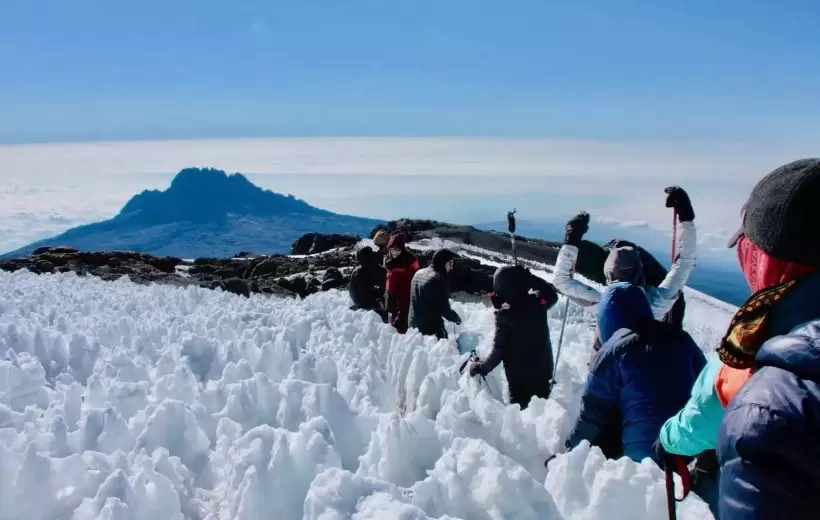
The summit attempt follows the same route as Machame — a midnight ascent through the cold and darkness to Stella Point and then Uhuru Peak. The exceptional acclimatization of the Lemosho Route means climbers typically arrive at the summit feeling stronger and in better condition than those on shorter routes. After the summit, descend to Mweka Camp for a final night on the mountain.
Final descent through the rainforest to Mweka Gate, where official summit certificates are presented. A deeply satisfying conclusion to one of Africa's greatest trekking adventures.
Both the Lemosho and Machame Routes are excellent choices. The primary differences are:
Read our complete Kilimanjaro Route comparison guide for a detailed analysis of all seven routes.
Begin training at least 10–12 weeks before your climb with a structured cardio and strength program. Read our Kilimanjaro Training & Preparation Guide and download our complete Packing List for everything you need to bring.
The Lemosho Route is the finest way to climb Kilimanjaro. Our experienced mountain team, quality equipment, and personalized approach ensure that your Lemosho climb is both safe and deeply memorable. Contact Serengeti Wild Tours today to book your summit adventure.
Copyright © Serengeti Wild Tours | All Rights Reserved