
Call Us 24/7

Summit night on Kilimanjaro is the defining moment of the entire climb. It is the night that separates those who reach Uhuru Peak from those who do not, the night that tests everything you have prepared for, and the night that — if you make it through — delivers the most extraordinary and emotional reward of your trekking life.
This guide from the Serengeti Wild Tours mountain team covers exactly what to expect on summit night — the timeline, the physical and mental challenges, the most common mistakes, and the expert strategies that give you the best chance of standing on the roof of Africa at sunrise.
For full preparation, read our Kilimanjaro Training Guide and our complete Altitude Sickness Guide alongside this article.
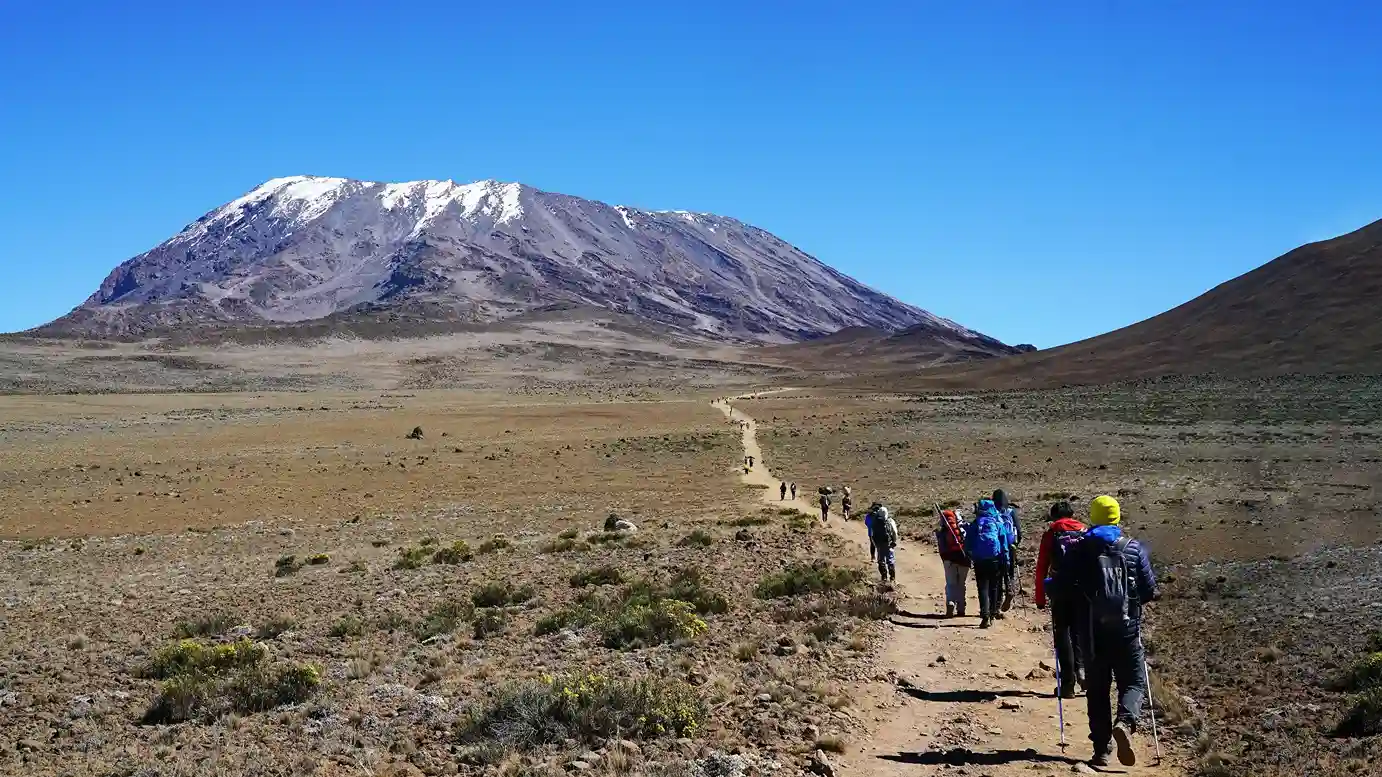
On most routes (Machame and Lemosho), you arrive at Barafu Camp (4,673m) in the afternoon, having trekked from Karanga Camp. Set up your tent, eat an early dinner (high-carbohydrate meals are essential), and rest as much as possible. The camp is exposed and cold — temperatures at Barafu drop to -10°C or below at night.
This is not a full night's sleep — you will not sleep at all, or at most a few hours. Altitude-related headaches, cold, and nervous energy make real sleep difficult. Rest in your sleeping bag, keep warm, drink water consistently, eat easy snacks, and mentally prepare for the ascent ahead.
Gear organization is critical before you lie down: ensure your summit layer clothing, headlamp, water bottles (wrapped in socks to prevent freezing), snacks, and hiking poles are all laid out and easily accessible in the dark.
Your guide wakes you in the dark. A warm drink (usually tea or porridge) is provided. Layer up methodically — this is the most important part of summit preparation. You should be wearing all your thermal layers, your down jacket, your waterproof outer shell, balaclava, warm hat, gloves and over-gloves, and gaiters before leaving the tent.
Consult our complete Kilimanjaro Packing List for your full summit night clothing checklist.
The summit ascent covers approximately 1,200 meters of vertical gain over 5–7 hours. You move in total darkness — your headlamp illuminating only the few meters of scree and rocky trail immediately ahead. The temperature will be between -10°C and -25°C.
The pace is the slowest of the entire climb — pole pole (slowly slowly) in its most extreme application. Each step is deliberate, controlled, and unhurried. Your guide sets the pace, and your job is to follow it exactly. Do not rush. Do not push past the guide. The pace is calibrated for altitude management, not for speed.
The ascent passes through several psychological stages:
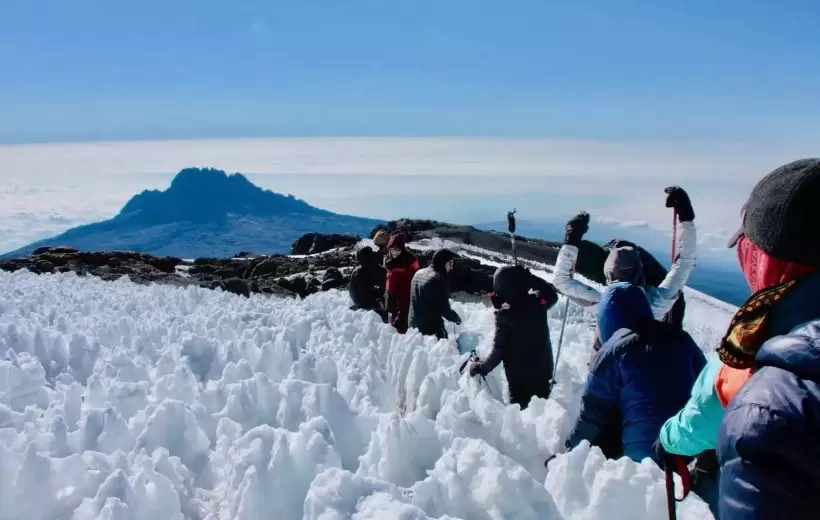
Reaching Stella Point (5,756m) is the first major milestone — and for many climbers, the most emotional moment of the entire climb. The first golden light of sunrise appears on the horizon, the summit glaciers glow pink and gold, and the enormity of what you have accomplished begins to register.
From Stella Point, the trail traverses the crater rim for approximately 45 minutes along a spectacular path past the southern ice fields and glaciers to Uhuru Peak (5,895m). This final section is on relatively flat terrain but remains at extreme altitude. Take it steadily.
The moment you reach the famous Uhuru Peak sign is indescribable. Tears are common — from climbers of all backgrounds and ages. The combination of physical achievement, altitude, cold, relief, and the extraordinary panorama from the roof of Africa creates one of the most profound emotional experiences in travel.
Take photographs. Hug your guide. Stand in silence for a moment. You have earned it.
After 20–30 minutes at the summit, the descent begins. You descend from Uhuru Peak back through Stella Point, down to Barafu Camp (where you collect remaining gear), and continue all the way to Mweka Camp (3,100m) — a total descent of nearly 2,800 vertical meters.
The descent is tiring but significantly faster than the ascent. Most climbers arrive at Mweka Camp in 4–6 hours from the summit. Your body, no longer fighting altitude, recovers remarkably quickly on the way down.
The roof of Africa is waiting for you. Our Kilimanjaro Trekking Tours are designed with acclimatization, safety, and summit success as our highest priorities. Contact Serengeti Wild Tours today and take the first step toward your most extraordinary adventure.
Copyright © Serengeti Wild Tours | All Rights Reserved